
Running a small business is not easy. You might offer great products or services, but if people cannot find you online, you lose customers. This is where SEO for Small Businesses becomes important. It helps your website appear when people search for products or services like yours on Google. Let’s understand what SEO is, why it matters, and how you can use it to grow your business.
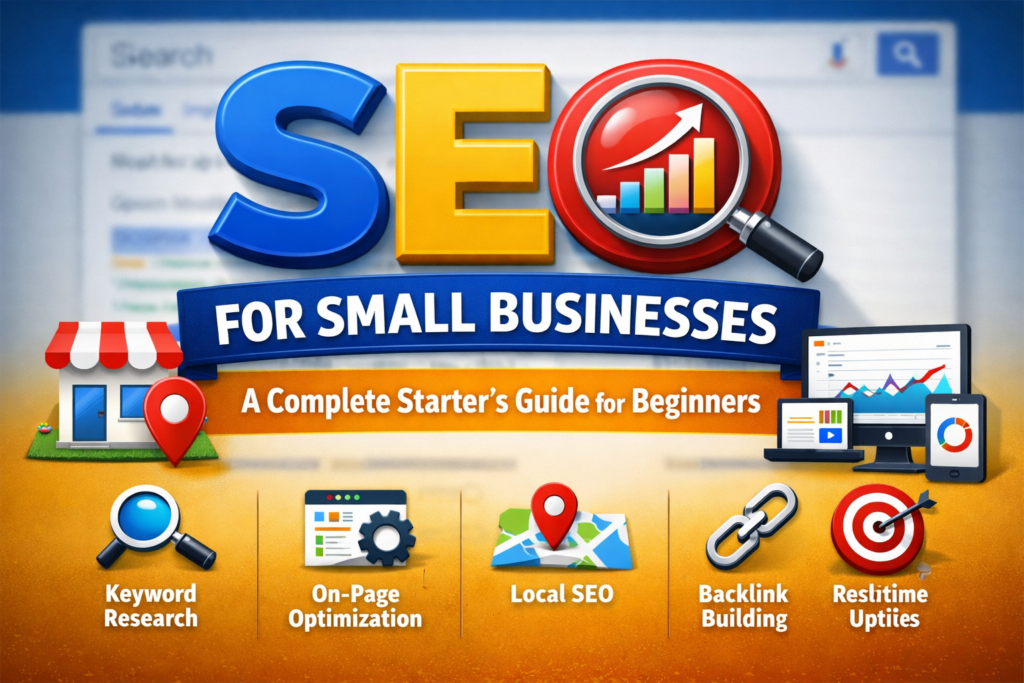
Image: https://chatgpt.com/s/m_69b40f76f9c48191804342b20f2f04ea
What Is SEO?
SEO stands for Search Engine Optimization. In simple words, it means improving your website so that search engines like Google can easily understand it and show it to people searching for related things. The better your SEO, the higher your website appears in search results.
When your website ranks higher, more people visit it. More visitors mean more chances of getting leads and sales. The best part? Unlike ads, SEO brings you free traffic that keeps coming as long as your website stays relevant.
Read More: How to Create Viral Social Media Campaigns? Go 0 to Viral!
Why Is SEO for Small Businesses Important?
Big companies can spend a lot of money on paid ads. But small businesses often have limited budgets. That’s why SEO for Small Businesses is so helpful — it gives you a fair chance to compete online without spending too much. Moreover, SEO is important because it:
- builds trust and credibility because people believe Google’s top results are reliable.
- improves your online visibility, helping customers discover your business easily.
- brings organic traffic (unpaid visitors) to your site.
- gives you long-term results, unlike ads that stop once you stop paying.
- helps you understand your audience through keywords and search data.
How SEO Works (In Simple Words)
Whenever someone searches for something on Google, the search engine checks billions of web pages to show the best ones. It uses a special formula called an algorithm to decide which sites appear first.
If your website is well-optimized with good content, proper keywords, and a clean structure, Google will show it higher in results. The more relevant and useful your site is, the better your chances of ranking.
Key Elements of SEO for Small Businesses
1. Keyword Research
Keywords are the words people type into Google. For example, if you run a bakery in Delhi, your keywords could be “best bakery in Delhi” or “custom cakes near me.”
You can use free tools like Google Keyword Planner or Ubersuggest to find keywords people search for. Pick the ones that match your business and add them naturally in your website content.
2. On-Page SEO
This means optimizing the content and structure on your website. Some simple steps are:
- Use your main keyword in the title, headings, and first paragraph.
- Add images with short descriptions (called alt text).
- Make sure your pages load fast.
- Write short, clear sentences and keep paragraphs simple.
- Add internal links to connect your website pages.
3. Off-Page SEO
Off-page SEO means building your website’s reputation outside of your site. The main part is backlinks — when other websites link to yours.
To get backlinks, you can:
- Write guest blogs on related websites.
- List your business on Google Maps and local directories.
- Share your content on social media.
- Ask happy customers to leave reviews.
4. Technical SEO
This sounds difficult but it’s not. It’s all about making sure your website runs smoothly.
Focus on:
- Mobile-friendly design (most people search on phones)
- Fast loading speed
- Secure connection (use HTTPS)
- Easy navigation so users can find what they want quickly
If your website is slow or confusing, visitors leave fast, and Google notices that. A well-structured, fast site helps you rank better.
5. Local SEO for Small Businesses
Local SEO helps your business appear when people nearby search for your services. For example, if someone types “plumber near me,” Google shows local results.
To boost local SEO:
- Create a free Google Business Profile
- Add your address, phone number, and business hours
- Encourage customers to leave reviews
- Keep your contact details the same on all platforms
This helps you attract nearby customers who are ready to buy.
How to Measure SEO Success for Small Business
You can’t improve what you don’t measure. Use free tools like Google Analytics and Google Search Console to track your progress.
They show:
- How many visitors come to your site
- Which keywords bring the most traffic
- How users behave on your pages
Check your results every few weeks. If something isn’t working, adjust your strategy and keep improving.
Common SEO Mistakes to Avoid
Many small businesses make simple mistakes that hurt their SEO. Avoid these:
- Using too many keywords (called keyword stuffing)
- Copying content from other sites
- Ignoring mobile users
- Not updating content regularly
- Skipping meta titles and descriptions
Even small improvements can make a big difference over time.
Final Thoughts on SEO for Small Businesses
SEO may sound technical, but it’s really about helping people find you online. When done right, it can give your small business a big voice. Start small — fix your website basics, create useful content, and stay consistent.
Over time, you’ll notice more visitors, more leads, and stronger trust in your brand. That’s the real power of SEO for Small Businesses — it turns your website into a 24/7 salesperson that keeps working, even when you’re not.